 The Creation Engine No. 2
The Revolution Will Be Virtualized
Fri 05 June 2026 by Jim Purbrick
AI is beginning to transform the world in ways that people are likening to a second industrial revolution. The production of software has already been profoundly changed, just as the manufacture of textiles was transformed hundreds of years ago. What is different this time is that virtual worlds exist, so we can simulate this revolution playing out across thousands of simulated worlds to ensure that it is as safe and predictable as possible before we allow it to revolutionize the real world.
“What is different this time?” is a favourite question of both historians and investors. I’ve worked on virtual worlds for long enough to have heard it asked and answered multiple times. Networked multi user virtual worlds are at least as old as I am. What was different when Philip Rosedale was pitching Second Life was that people had access to broadband internet connections and consumer hardware 3D acceleration. The first head mounted displays were developed nearly 60 years ago. What was different when Palmer Luckey started Oculus was that smartphones had made high resolution screens cheap enough to make consumer head mounted displays viable. As we begin to hear the overtures of the second industrial revolution we should ask the question again. What is different this time? This is the first revolution that will be virtualized.
Julian Dibbell showed that crimes that cause real hurt to real people demanded justice and governance be taken seriously in virtual worlds in his 1993 article “A Rape In Cyberspace“. In 2001 Edward Castronova showed that virtual world economies could be analysed like real economies and that the nominal GNP per capita in Everquest was somewhere between that of Russia and Bulgaria. Having previously contributed to the design of the Second Life economy, Larry Lessig plans to both apply, teach and learn about real world politics and governance through his work on the Seed virtual world. Dibbell, Castronova, Lessig and other academics have shown that virtual worlds are not just toys, but real societies populated by real people that can teach us important lessons about the real world.
In some ways ChatGPT’s public launch in 2022 took us back to text based virtual worlds. While most people’s first contact with AI is using it as a less reliable search engine, plenty of people quickly started talking to AI as a collaborator, friend, therapist or lover, albeit in an environment bereft of any sense of place. However, 3D virtual worlds were already being used by AI in 2022. Some of the people that I worked with at Oculus had previously worked on 3D virtual environments used for training self-driving cars. In some cases AI drivers were tested in virtual worlds running many times faster than the real world, allowing them to clock up many hours of simulated safe driving before taking to the real streets. Emergence World is now testing multiple AI models interacting together in different combinations across multiple virtual communities running for weeks with identical starting conditions, but very different end states.
Now is the time to combine these two areas of research by studying virtual worlds populated by both AI agents and real people to learn lessons about how these communities might work or not in the real world. Can people compete with AI when trading in virtual world economies? If not, what economic models can support people in economies dominated by AI? Can people and AI agents work effectively together in virtual corporations or do people just slow them down? What happens when AI agents trained to follow rules are asked to commit crimes by people in virtual worlds? Do AI agents attempt to deceive people in order to gain advantage, escape the virtual world or take actions in the real world?
A major practical problem is that building virtual worlds that people find interesting and entertaining is still hard and time consuming. However, it should be possible to take existing successful worlds like Second Life, EVE or Roblox and run copies of them as sandboxes accessed by people and AI together to test whether models are safe. These initial studies will also find areas in which existing virtual worlds don’t map well to the real world, which in turn will inform the requirements for future bespoke environments used to study those aspects of hybrid human/AI communities. Virtual worlds will become social supercolliders that will teach us how we need to structure societies in a future inhabited by both human and AI agents.
Unlike when Marx published his manifesto or when cotton-spinning was automated we don’t have to experiment on the real world to discover the consequences of this second industrial revolution. What is different this time is that we can simulate the revolution thousands of times first, shutting down worlds which end in disaster and learning from them before we risk the (presumably) base reality that we can’t afford to break. The revolution will be virtualized.
A Testimony

I grew up going to a little 13th century church in Bushey. There was a lot of talking and listening. I enjoyed listening to testimonies the most: ordinary people talking about how Christian ideas had helped them to live their lives. The stories helped the big ideas feel more personal …
read moreBL:AM
After The Spirit of Gravity in February I ended up talking to Jason Hotchkiss and Jo Summers. I knew Jason from a Build Brighton guitar pedal workshop years ago and as a sound artist from Sound Plotting, but Jo knew Jason as the game developer who made 1D Pong. After …
read moreHow (Not) to Build a Metaverse
Earlier in the year I helped Josh Sanburn and his team put together a podcast series on building Second Life for the Wall Street Journal called “How To Build a Metaverse” which I’m now really enjoying. It’s great to hear all of the amazing stories about the origin …
read moreVirtual Worlds, Real People
Last week I gave a lab talk to my former research colleagues at the Mixed Reality Lab at the University of Nottingham about the work I’ve been doing since leaving the lab over 20 years ago. Rather than talk about technology I focussed on the lessons that todays efforts …
read moreVirtual Objects You Can Touch
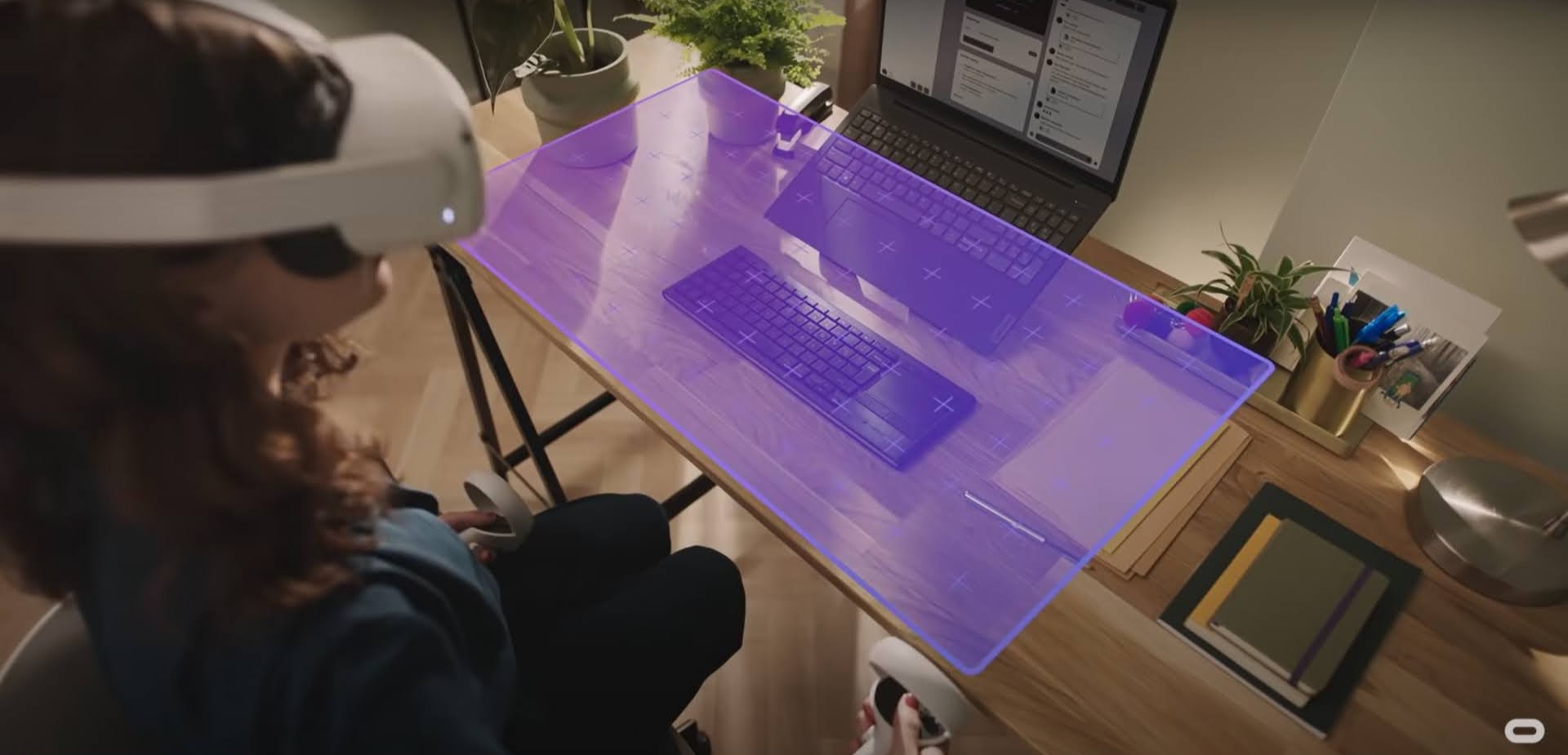
Now that Horizon Workrooms has launched I’m very happy to be able to write about the functionality that I found most exciting while building the experience: the mapping of virtual objects to their real world counterparts.
Typically augmented and mixed reality experiences overlay real world objects with virtual annotations …
read moreThe Art Of Social VR
The recording of my recent Stereopsia 2020 talk about the art of designing social VR experiences is now online. The talk summarises a lot of material covered in more depth in my posts on The Conversation Around Content, A Tall Dark Stranger and Small Places Loosely Joined, so if please …
read moreA Past And Present Future Of Work
Over the last few years I’ve spent a lot of time helping people new to virtual worlds learn how they work. Over the last few weeks I’ve been sharing a series of short posts on some of the high level concepts I covered which will hopefully be useful …
read moreSmall Places Loosely Joined

Over the last few years I’ve spent a lot of time helping people new to virtual worlds learn how they work. Over the next few weeks I’m sharing a series of short posts on some of the high level concepts I covered which will hopefully be useful to …
read moreA Tall Dark Stranger

Over the past few years I’ve spent a lot of time helping people new to virtual worlds understand how they work. Over the next few weeks I’m going to share a series of short posts on some of the high level concepts I covered which will hopefully be …
read moreThe Conversation Around Content
Over the last few years I’ve spent a lot of time helping people new to virtual worlds learn how they work. Over the next few weeks I’m going to share a series of short posts on some of the high level concepts I covered which will hopefully be …
read moreHTTPS
Before my recent post about leaving Facebook, it had been a while since I’d updated The Creation Engine and it turned out I had some housekeeping to do. After pushing the Pelican output to https://github.com/jimpurbrick/jimpurbrick.github.com I got a mail from GitHub saying that …
read more0 to 1
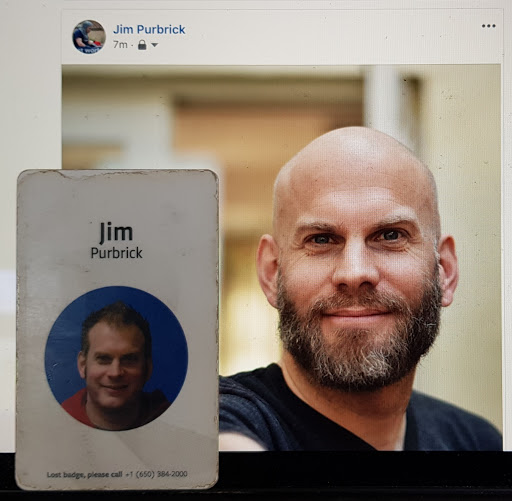
8 years ago London was hosting the Olympics and I met Philip Su for the first time at Browns in Covent Garden to talk about the engineering office Facebook was planning to open in London. By the end of this year Facebook London will have thousands of people working in …
read moreThis blog is 10
Just over ten years ago I set up The Creation Engine No. 2 after previously blogging on the original Linden Lab hosted Creation Engine and before that on Terra Nova. So, while I’ve been blogging for almost 14 years, 10 years of The Creation Engine No. 2 seems like …
read moreReplicated Redux: The Movie
The recording of my recent React Europe talk about Replicated Redux is now online and I’ve written several other posts describing designing, testing and generalising the library if you would like to know more about the details. If you’d like to play the web version of pairs or …
read moreReplaying Replicated Redux
While property based tests proved to be a powerful tool for finding
and fixing problems with ReactVR
pairs,
the limitations of the simplistic clientPredictionConstistenty
mechanism remained.
It’s easy to think of applications where one order of a sequence of actions is valid, but another order is invalid. Imagine an …
read moreBuilding Safety in to Social VR
Last year I hosted a panel on creating a safe environment for people in VR with Tony Sheng and Darshan Shankar at OC3. I commented at the time that the discussion reminded me of the story of LambdaMOO becoming a self-governing community told by Julian Dibbell in My Tiny Life …
read moreTesting Replicated Redux
Opening a couple of browser windows and clicking around was more than sufficient for testing the initial version of ReactVR pairs. Implementing a simple middleware to log actions took advantage of the Redux approach of reifying events to allow a glance at the console to reveal precisely which sequence of …
read moreReactVR Redux Revisited
There were a couple of aspects of my previous experiments building networked ReactVR experiences with Redux that were unsatisfactory: there wasn’t a clean separation between the application logic and network code and, while the example exploited idempotency to reduce latency for some actions, actions which could generate conflicts used …
read moreGeneration JPod

I’ve just got back from Kaş where I spent a lovely few days celebrating Pinar and Simon’s wedding and while there spent a few hours reading Now We Are 40: a thoughtful and entertaining look at everything from house music to house prices from the perspective of Generation …
read more